- nineteen eighty four
- Posts
- Climate crisis getting you down? Here's how we can shake the eco-anxiety
Climate crisis getting you down? Here's how we can shake the eco-anxiety
Well isn't this a nice surprise. We're in your inbox again a lot quicker this time.

nineteen eighty four
April 14, 2023

Hi friend,
Well isn't this a nice surprise. We're in your inbox again a lot quicker this time.
It's not a scheduling error on our part, honest. Nineteen eighty four is just going from monthly to semi-monthly.
As to why we've upgraded from being just a monthly newsletter, we thought that there was just so much news out there we wanted to show you that getting a bulletin to you once a month just wasn't cutting it. It's as simple as that.
Remember, if you ever lose an issue in your inbox or want to re-read an older one, you can find them all here.
🔍 Fun fact of the week: Humans can smell rain better than sharks can smell blood. The fresh smell after rainfall, petrichor, can be sensed by humans in concentrations as low as 100 parts per trillion! This is down to the evocative musk of newly moistened soil called geosmin. In comparison, the sniffing snouts of sharks can only smell blood about 1 part per million in seawater.

How we can tackle feelings of eco-anxiety

Photo by Mika Baumeister on Unsplash
Climate change can affect our mental health in different ways. Feelings of worry, fear, hopelessness, and even guilt about our ongoing climate crisis are becoming more common and are known as 'eco-anxiety'. Wherever we are, more and more of us are starting to feel the effects the climate crisis has on our world, whether it's through shortage of food, extreme weather, or rise of health risks. Although these feelings of eco-anxiety can't be 'fixed' per say, they can be managed. Here's the different ways we can tackle eco-anxiety to shake that feeling of despair.
Now then, banks for poo? Surely not? It might seem odd to store vast amounts of frozen excrement, but microbiologist Adrian Egli is doing it all over the world from Switzerland to Ethiopia. The reasoning behind the poo project is to preserve microbial diversity, which is currently in massive decline due to our lifestyles, processed foods, and the consumption of antibiotics. Egli's Microbiota Vault currently stores around 3,000 samples for prosperity so that long-lost bacteria might one day be revived, cultured, and used to treat disease.
With the number of ships sailing the oceans rapidly increasing year by year, so are collisions with our cetaceans, and thousands of whales are sadly being killed by passing ships. Mandatory speed restrictions, proposed rerouting of ocean traffic, and whale detection systems are all being discussed as possible solutions, but variations in the effectiveness and enforcement of these methods means we're going to need all hands on deck to save our whales.

You'll never guess the scale of this project
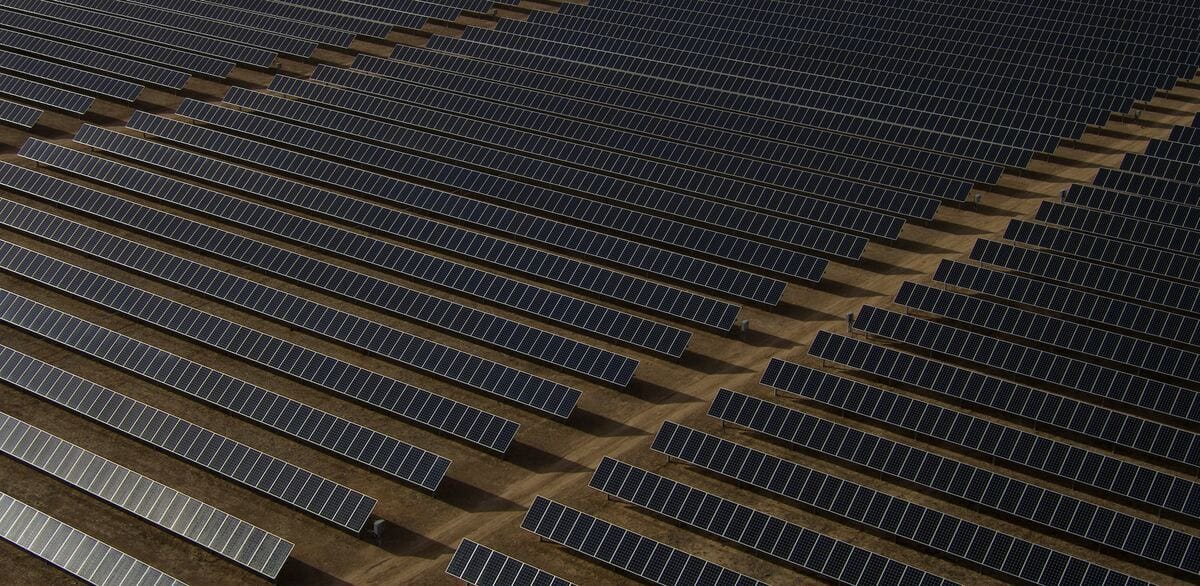
Photo by American Public Power Association on Unsplash
What does it take to power 7 million homes in Britain? Apparently £18 billion quid, four 3,800km long cables, and a 10.5 gigawatt solar farm. This is the new power project from Xlinks we're talking about here; the plan to construct a solar farm the size of Greater London in the Moroccan desert and carry all the electricity back to the UK. Apparently the biggest cable-laying vessel in the world isn't even big enough to handle this project. They're going to need a bigger boat...
Dutch studio MVRDV has just released visuals for the new Van Gogh Homeland. Launching in the Netherlands in 2025, the outdoor exhibition will shine a light on environmental pressures and flood risks the Brabant landscape is facing by including temporary super dunes, horticultural towers, rain chambers, and heather houses. Curator Winy Maas has stated instead of giving visitors a moralistic message, they will be allowed to 'feel' climate change.
If you're looking for something new to listen to, Dezeen and SketchUp have teamed up to launch Climate Salon, a brand new podcast on sustainable design, architecture, and technology. Each hour-long episode will explore everything from the role that technology can play in cutting down emissions, to integrating nature into design processes, and even the potential of new green technologies. Get your headphones on and catch the first episode now on Spotify, Apple Podcasts, and Google Podcasts.

The CEO of Twitter is now a dog

Photo by Minh Pham on Unsplash
We really wish we were having you on with that headline.
X Holdings Corporation, SpaceX, X Æ a 12; Elon Musk seems to really like the letter X. So it comes as no surprise that Twitter no longer exists as a company, and has instead become 'X', merging with X Corporation. The change comes as part of Musk's grand plan to create his own 'everything app', a heavily monetised closed environment not too dissimilar from Tencent's WeChat app in China. Topping off the news that the blue bird was being put in the bin was Musk's statement on his recent BBC interview that his dog Floki is now running the show. Will this wild ride ever end?
'Chew plants not plastic' is the new campaign coming from plastic-free gum manufacturer Nuud, with its new messaging plastered on billboards calling out the gum giant Wrigleys for its use of single-use plastics in its product. Kier Carnie, founder of Nuud, has called the use of plastic in regular gum 'the food industry's dirtiest secret'. It might be labelled as 'gum base' on the ingredients list, but a single piece of regular gum contains around the same amount of plastic as a drinking straw.
Can virtual product placement fix the sustainability problem faced by Hollywood and advertisers? Apparently it can. Studios like Netflix and GM might have begun featuring more EVs in their films and series in an attempt to promote more sustainable products, but what if the products were digitally inserted to reduce the carbon footprint of content production itself? Check out some of the advantages virtual product placement can have to the environment. Selling out doesn't have to be unsustainable. 😉

'Pardon me. Do you have any Grey Poupon?'

It's time to crack open another cold one
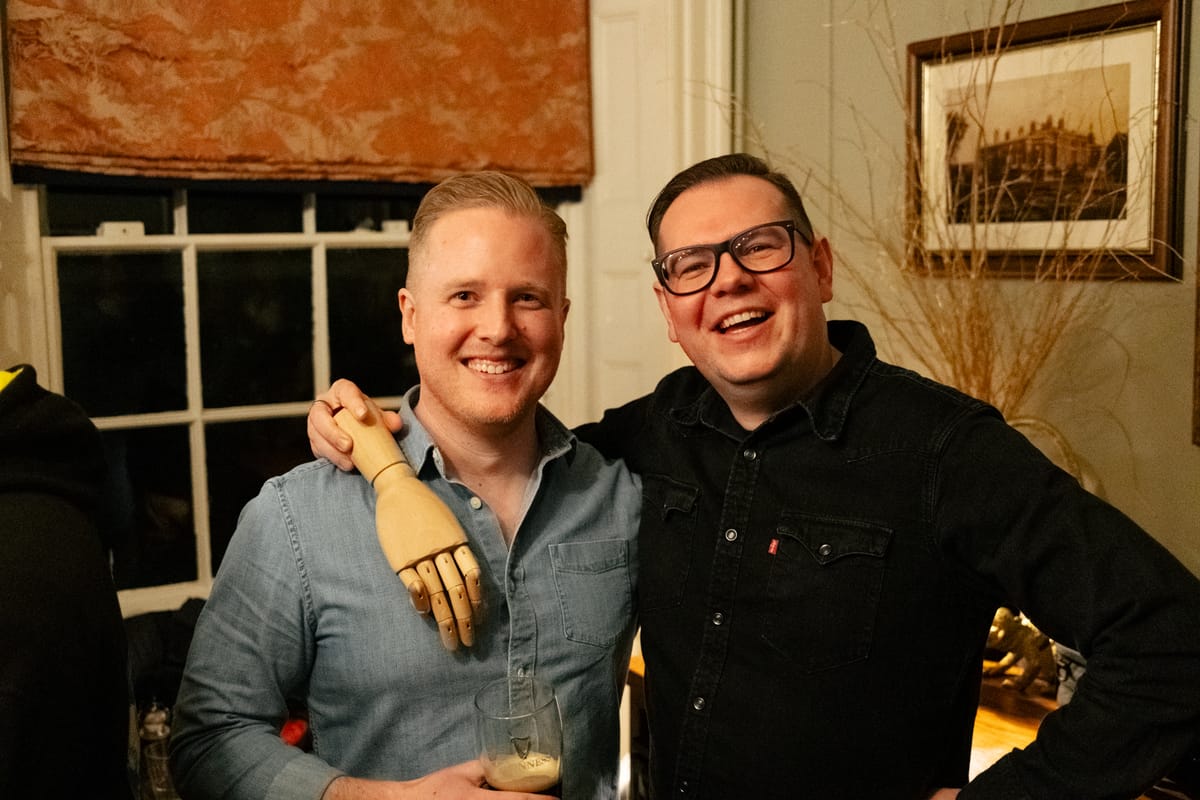
Russ, Tim, and Tim's third hand at the March People, Planet, Pint event
People, Planet, Pint is back again! Russ and Tim are going to be your hosts for another evening of top sustainability chatter and patter on April 19th. Did you know that your first drink is free? You can still get free tickets here, but we can't guarantee Tim will have his wooden hand with him this time.
Speaking of free things, Russ is starting a completely free email course on effective impact reporting. With a mix of written and video content, the course will feature top tips on writing, designing, and publishing an impact report. You have until April 16th to sign up, so don't miss out. It won't be available anywhere else on our channels!
It feels a bit like we're telling you to cheat on us, but Russ has launched a brand new newsletter over on LinkedIn, Avery & Brown's Monthly Mixtape. The new publication goes out on the last day of every month and features all the Avery & Brown team news goodness you could ever need.
If you've already read Russ' newest issue or last month's nineteen eighty four, you'll have already spotted that the Avery & Brown team are going to be heading over to London on April 21st to take part in The Big One, an absolutely massive nonviolent direct action with 100,000 people gathering outside the Houses of Parliament. Let us know if you're going and want to meet up. We've also got something absolutely MEGA planned for it, so watch this space. 👀

Each month, we feature a different Certified B Corporation, to celebrate the brands which are working hard to create a better business world. To learn more about B Corps, click here.
Our featured B Corp this month is...
Harvest London

Photo by Markus Spiske on Unsplash
Food production isn't usually that great for the environment, but urban farming is a bit different.
Harvest London's vertical farms use 100% renewable energy and get produce to customers within hours of being harvested. We're talking salads, herbs, and even special ingredients like Peruvian black mint that are hard to source locally.
Because farming in a controlled environment provides crops with the exact mix of light, water, nutrients, and humidity they need, Harvest London can grow produce all year-round at a volume that isn’t possible in fields without pesticides.
Have you enjoyed this month's nineteen eighty four? Let us know your feedback by dropping us a line at [email protected]!